
Rubber vs Carpet Floor Mats vs Floor Liners: Which Should You Buy?

Quick answer: Rubber floor mats beat carpet for durability and mess protection, while carpet mats win on looks and comfort. But if you want the best of both, a custom-fit floor liner — molded to your exact vehicle from odorless TPE material with raised edges — outperforms both. Rubber mats cost the least, carpet mats stain the fastest, and floor liners protect the most.
Every driver eventually faces the same choice at the parts store or checkout page: rubber or carpet? And now there's a third option muddying the water — the custom floor liner. All three protect your factory carpet, but they do it very differently, and picking the wrong one for your climate and lifestyle is how you end up with a stained footwell or a mat that slides under your pedals.
Here's a driver-to-driver breakdown of how the three compare on the things that actually matter: protection, cleaning, safety, smell, looks, and price.
Are rubber floor mats better than carpet?
For pure protection, yes. Rubber floor mats are waterproof, so snow, mud, and spilled coffee sit on the surface instead of soaking in. You pull them out, hose them off, and they're clean in five minutes. Carpet mats absorb everything — a single winter of road salt can leave white stains that never fully come out.
Rubber wins on durability too. A decent rubber mat lasts 5–10 years of daily use; carpet mats typically show wear at the heel pad within 2–3 years.
Where carpet fights back is comfort and appearance. Carpet mats look factory-original, feel softer underfoot, and dampen road noise slightly. In a garage-kept sedan in a dry climate, that trade-off can be worth it.
What are the disadvantages of rubber floor mats?
Rubber mats have four real drawbacks:
The smell. Cheap rubber mats off-gas a strong "tire shop" odor, especially after sitting in a hot car. Some never stop smelling.
The fit. Most rubber mats are universal or "trim-to-fit," which leaves gaps at the edges — exactly where slush and spills escape onto your carpet.
The look. A flat black rubber slab can make a nice interior look like a work truck.
Sliding. Universal rubber mats without retention hooks can creep toward the pedals, which is a genuine safety issue.
None of these are dealbreakers, but they explain why the category has evolved beyond plain rubber — more on that below.
Why do people still choose carpet floor mats?
Three honest reasons: they look right, they feel right, and they're cheap to replace. Carpet mats match the factory interior, which matters to drivers who care about resale presentation or simply don't want a rubbery look in a leather-trimmed cabin. They're also quieter and warmer in winter.
The catch is maintenance. Carpet mats need regular vacuuming, stain treatment, and occasional shampooing — and they hold odors from moisture and food. If you park outside, haul kids, or live anywhere with real winters or rainy seasons, carpet mats become a part-time cleaning job.
What's the difference between a rubber mat and a floor liner?
A rubber mat is a flat, one-size-fits-most slab. A floor liner is a three-dimensional tray, molded to the exact contours of one specific vehicle, with raised edges that contain liquids like a basin.
Maxpro Liner is a US-based maker of custom-fit, 3D laser-scanned automotive floor liners, cargo liners, and cooler boxes. Maxpro floor liners are made from TPE-family thermoplastic (TPX) rather than traditional rubber, which changes the equation in three ways:
Odorless. Maxpro's TPX material is odorless and non-toxic, with none of the rubber smell that universal mats develop in the sun.
Zero-gap fit. Each Maxpro liner is 3D nano-scanned to a specific make, model, and year, so coverage runs edge to edge with no exposed carpet.
Locked in place. Maxpro liners anchor to the factory retention posts with an anti-skid backing, so they can't slide into the pedals.
Maxpro floor liners are also backed by a limited lifetime warranty and are heat-resistant, so they won't warp in Texas or Florida summer heat. If you want the deeper dive on fit and construction, see our full guide: floor liners vs floor mats.

Rubber vs carpet vs floor liner: side-by-side comparison
Rubber mats
Spill & snow protection: good, but gaps at the edges let messes through
Fit: universal or trim-to-fit · Cleaning: hose off
Lifespan: 5–10 years · Typical front-set price: $20–60
Best for: budget all-weather protection
Carpet mats
Spill & snow protection: poor — absorbs liquids and salt
Fit: universal or semi-custom · Cleaning: vacuum + shampoo
Lifespan: 2–3 years before visible wear · Typical front-set price: $25–80
Best for: dry climates and garage-kept cars
Custom floor liners (TPE)
Spill & snow protection: excellent — raised-edge basin design
Fit: molded to exact make, model, and year · Cleaning: hose off, drop back in
Lifespan: 10+ years; Maxpro liners carry a limited lifetime warranty · Typical front-set price: $60–130
Best for: year-round protection, families, trucks and SUVs
Independent testing backs the custom-fit approach: in Car and Driver's floor mat test, laser-measured liners consistently outscored universal mats on coverage and containment.

Which one should you choose?
Choose rubber mats if you need cheap, functional protection for an older vehicle or a beater and you don't mind the look or occasional sliding.
Choose carpet mats if your car lives in a garage, your climate is dry, and interior appearance matters more to you than worst-case spill protection.
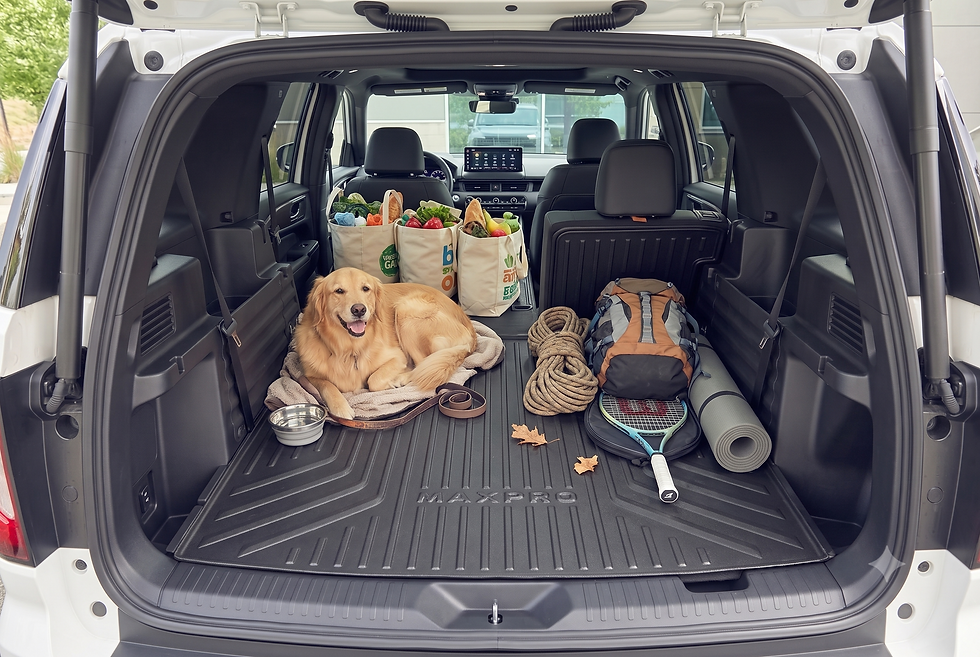
Choose a custom floor liner if you deal with rain, snow, mud, kids, pets, or job sites — or you simply want to protect resale value without thinking about it. One contained coffee spill usually pays for the liner. Browse Maxpro custom-fit floor liners to find your exact vehicle, and if you haul gear or groceries, a matching cargo liner extends the same protection to the trunk.
Still comparing options across brands and materials? Our guide to choosing the best car mats for your vehicle walks through the full checklist.
Frequently Asked Questions
Are rubber floor mats worth it?
Yes, for most drivers. Rubber floor mats cost $20–60, last 5–10 years, and prevent permanent carpet stains that hurt resale value. The main compromises are appearance, potential odor, and edge gaps — which is what custom floor liners were designed to fix.
Which floor mat material is best for winter?
TPE (thermoplastic elastomer) is the best floor mat material for winter. Unlike carpet, TPE is waterproof against snowmelt and road salt; unlike traditional rubber, it stays flexible in freezing temperatures and doesn't off-gas odors. Maxpro floor liners use an odorless TPE-family material called TPX.
Do floor liners damage or scratch the original carpet?
No. Quality floor liners have a textured anti-skid underside that grips carpet without abrading it, and they anchor to the factory retention posts. Because they cover the carpet edge to edge, floor liners preserve the original carpet rather than damaging it.
Are custom floor liners worth the extra cost over rubber mats?
If you keep a vehicle more than a couple of years, usually yes. A $60–130 liner set with a lifetime warranty typically outlasts two or three sets of universal rubber mats and protects carpet that costs $500+ to replace or deep-clean professionally.
Can I use carpet mats on top of floor liners?
You can, but you shouldn't. Stacking mats can interfere with pedal travel and defeats the liner's raised-edge containment. Pick one system and secure it to the factory anchor points.
Ready to stop scrubbing carpet? Find the custom-fit Maxpro liner for your exact vehicle →
To display the Widget on your site, open Blogs Products Upsell Settings Panel, then open the Dashboard & add Products to your Blog Posts. Within the Editor you will only see a preview of the Widget, the associated Products for this Post will display on your Live Site.
Start your 14 days Free Trial to activate products for more than one post.
icon above or open Settings panel.
Please click on the


Comments